Osmanli
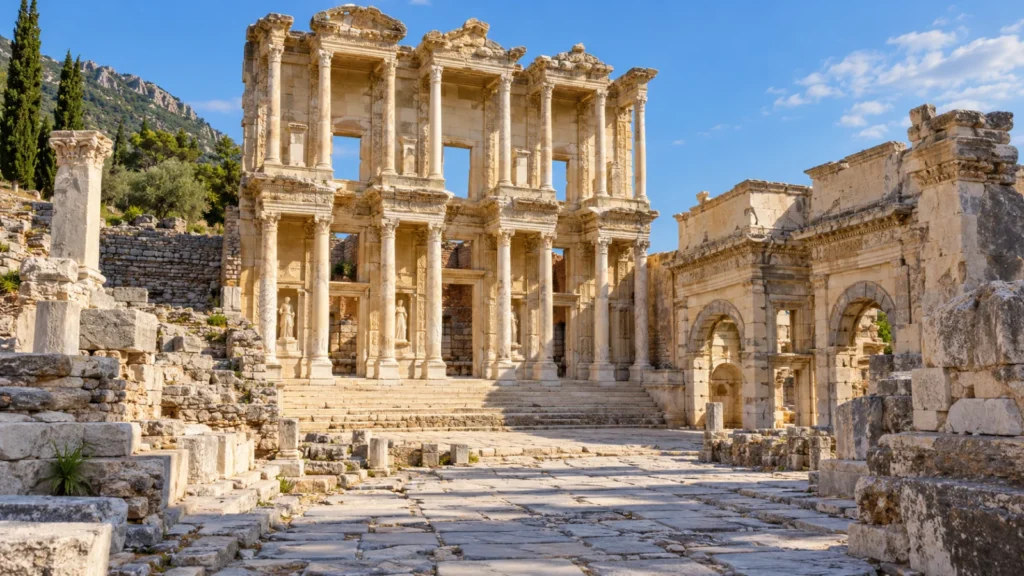
Ephesus is an archaeological site near Selçuk in İzmir province. Its surviving streets and Roman-era monuments offer a view of ancient urban life. Plan tickets, walking time and any separate museum visit before setting out.
Learn about the history of Ephesus
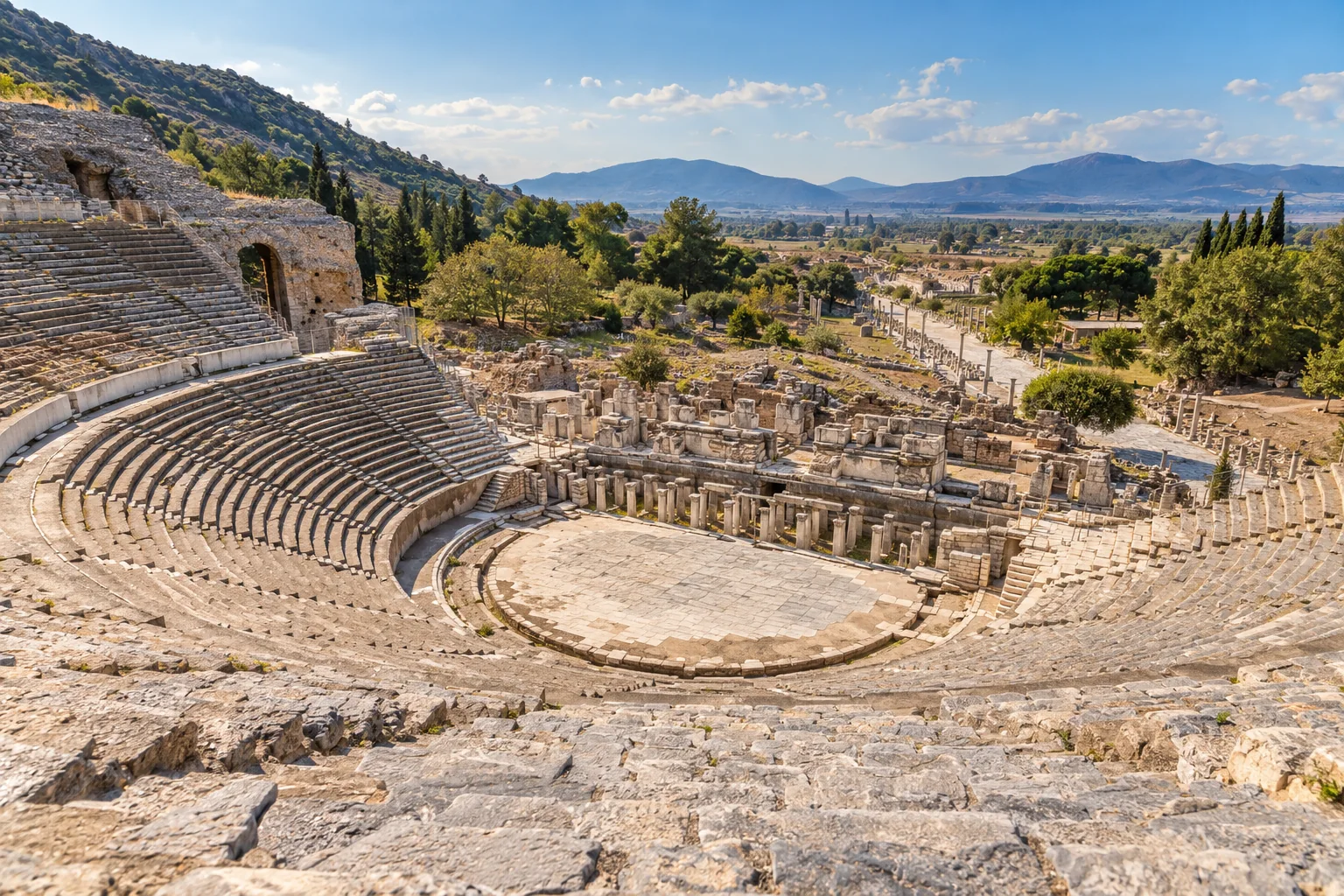
Ephesus is an ancient archaeological site near Selçuk in İzmir province. It was an important city in antiquity and is recognised as a UNESCO World Heritage Site. The surviving remains offer a walking route through the ancient city, with nearby Selçuk providing modern visitor services.
To view the tourist program to Ephesus
The most important historical monuments in Ephesus
Temple of Artemis
The Temple of Artemis is associated with ancient Ephesus and the traditional Seven Wonders of the Ancient World. Only limited remains survive. Visit the site with realistic expectations and distinguish it from the larger archaeological area of Ephesus.
Basilica of St. John
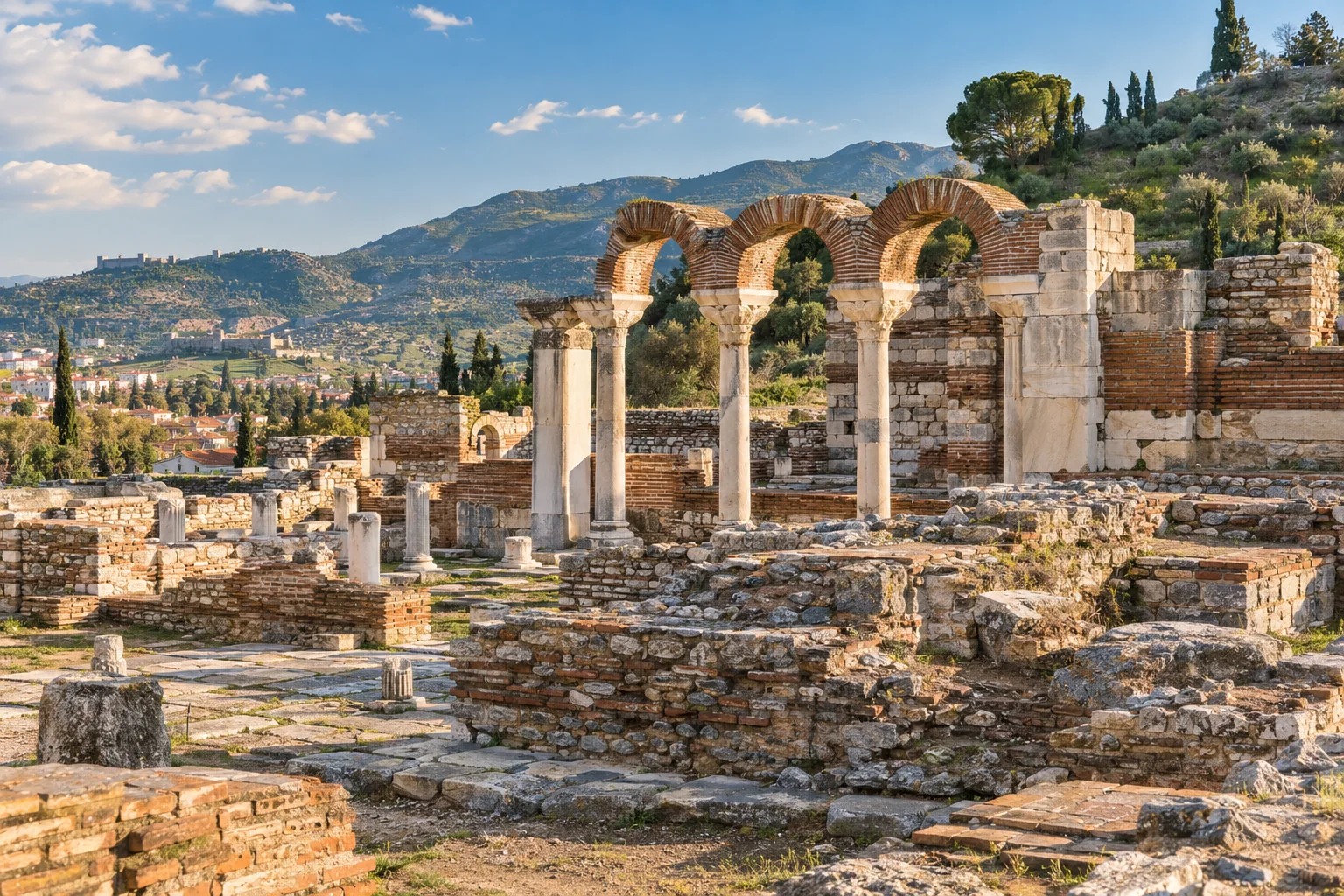
The ruins of the Basilica of St. John stand on Ayasuluk Hill in Selçuk and form part of the Christian heritage associated with Ephesus. The basilica was built over the traditional burial site of St. John and is associated with the Byzantine emperor Justinian. Plan it as a separate visit from the main Ephesus archaeological area, and confirm visiting hours and ticket arrangements.
Terrace Houses of Ephesus
The Terrace Houses at Ephesus preserve examples of Roman domestic decoration, including mosaics and wall paintings. Access can have separate ticket conditions. Check the current arrangement before assuming the houses are included in general site admission.
Ephesus Theatre
The Great Theatre is one of Ephesus’s major surviving monuments. Follow the current visitor route and access instructions. It offers a view of the ancient city’s public life without needing an unverified claim that it was the world’s largest theatre.
Celsus Library
The Library of Celsus is a Roman-era monument at Ephesus, known for its reconstructed façade. It dates to the second century CE, rather than 125 BCE. Its remains help illustrate the city’s architectural and cultural history.
Hadrian’s Temple
The Temple of Hadrian is one of the monuments on the archaeological route through Ephesus. It should not be described as an eighth wonder of the ancient world. Visit it alongside the site’s streets and other surviving Roman-era structures.
Selçuk
Selçuk is the town used as a base for visiting Ephesus. Its museum and nearby historic sites can be considered separately from the main archaeological area. Check entry arrangements and allow enough time if combining several visits.