Osmanli
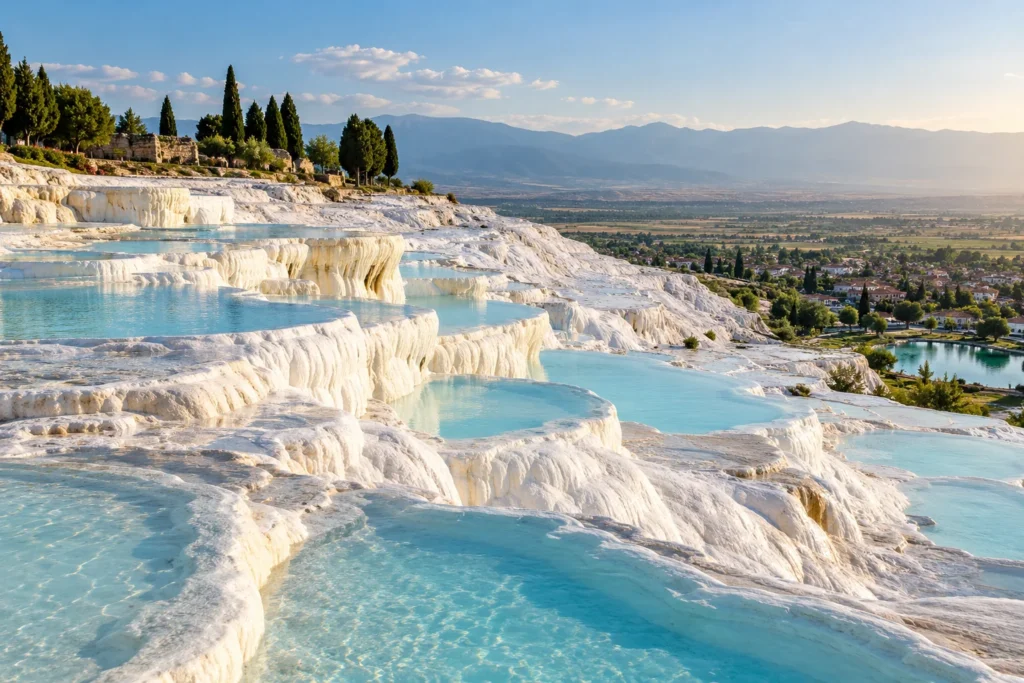
Pamukkale in Denizli province is known for its white travertine terraces and the nearby ancient site of Hierapolis. This guide describes a sightseeing visit rather than a medical treatment. Use the designated visitor paths and confirm the current entrance and pool arrangements.
Information about the city of Pamukkale
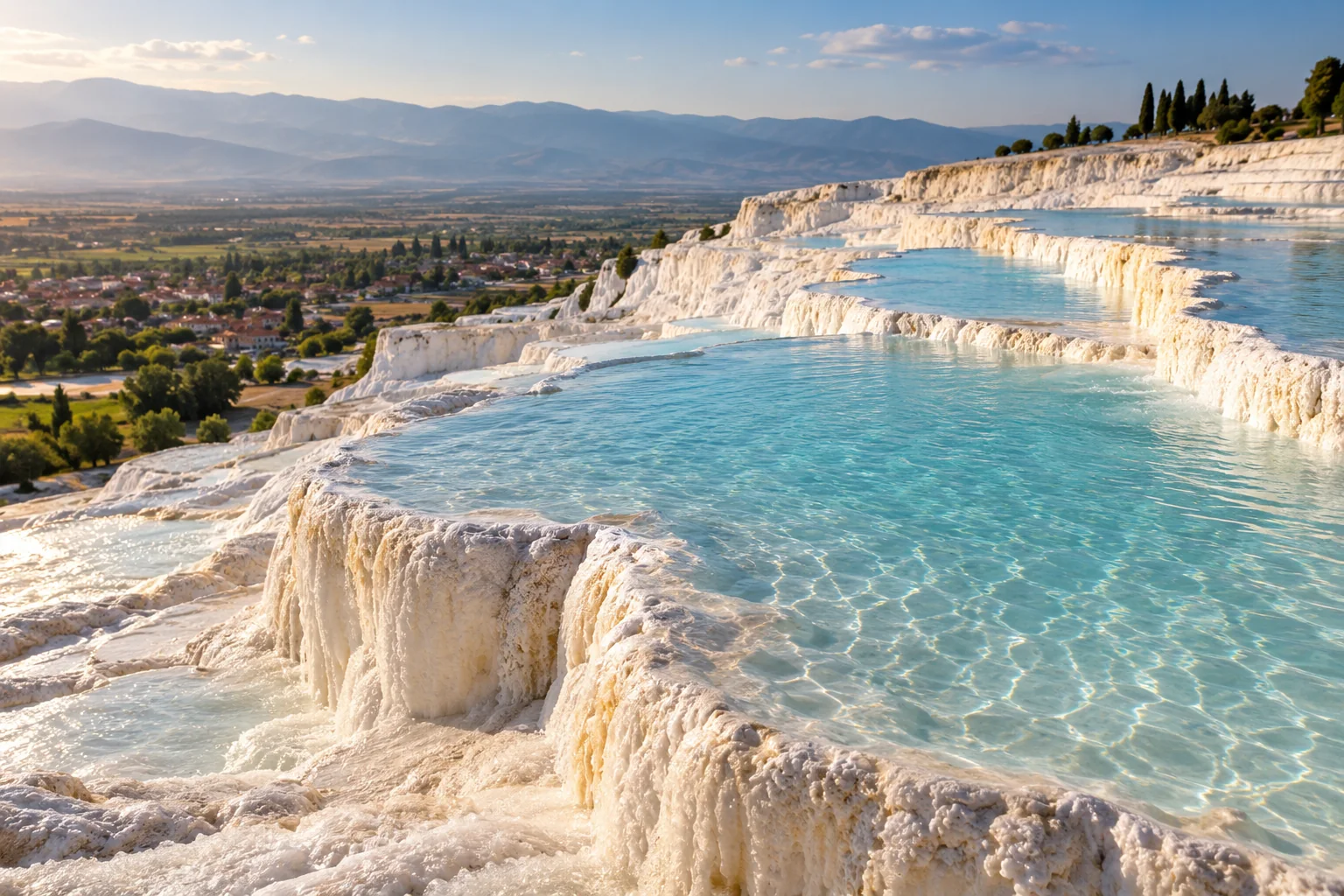
Pamukkale is in Denizli province and is known for its white travertine terraces beside Hierapolis. The name means “cotton castle”. It is a sightseeing destination; this guide does not attribute disease-treatment benefits to its waters.
Pamukkale warm springs
To view the Pamukkale excursion program
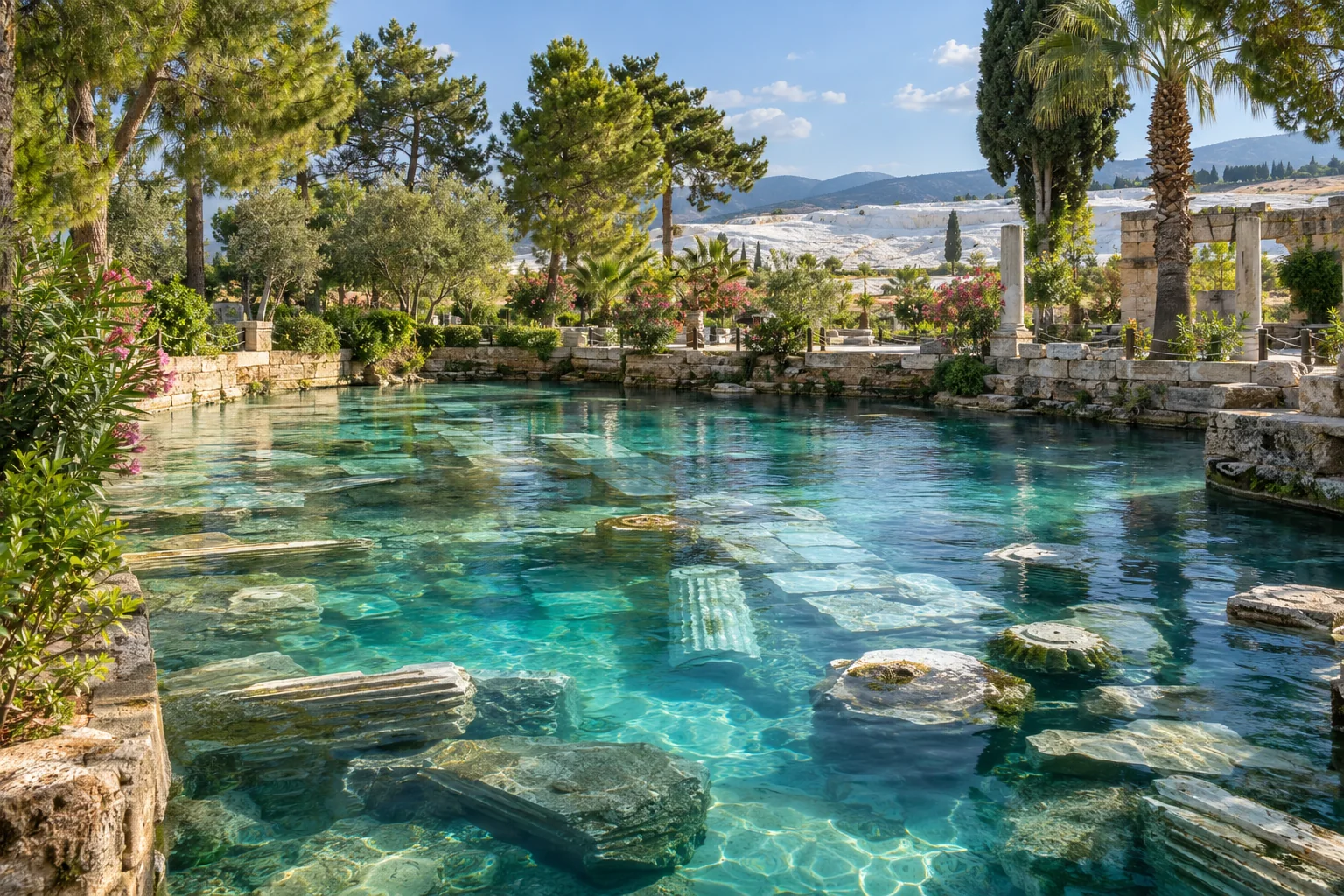
Mineral-rich water helped form Pamukkale’s white travertine landscape. Visitor access follows designated routes to protect the site. Check the current rules and ticket arrangements; the waters are not presented here as a cure for illness.
White Travertine Terraces
Pamukkale’s white terraces form as calcium carbonate carried by the spring water is deposited. The landscape includes stepped basins and formations resembling petrified waterfalls. Follow designated visitor routes and site instructions to protect these formations, and confirm which areas are accessible before visiting.
Hierapolis Theatre
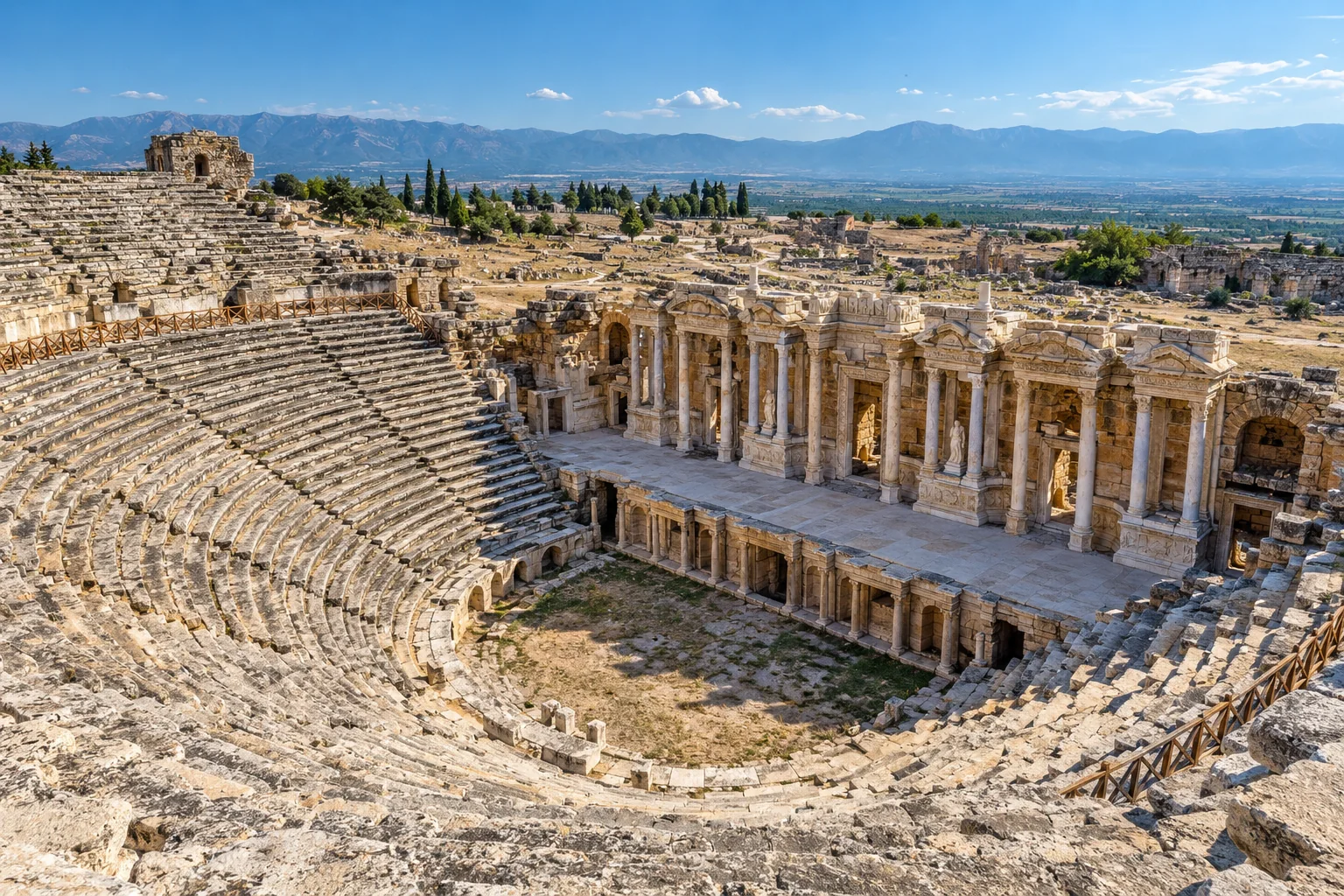
The theatre is one of Hierapolis’s surviving Roman-era monuments. Its standing structure is associated with the reign of Severus, and its decoration includes religious and ritual scenes. Include it with the other ancient-city monuments according to the available visitor route, following entry and conservation instructions.
Pamukkale Antique Pool
The antique pool is a separate attraction from Pamukkale’s travertine terraces. The government museum website states that the pool area is temporarily open to visitors, checked on 9 October 2026. That statement does not confirm swimming access or its inclusion in the ticket; confirm swimming arrangements, fees and availability for your date before booking.